The End of a Lordship
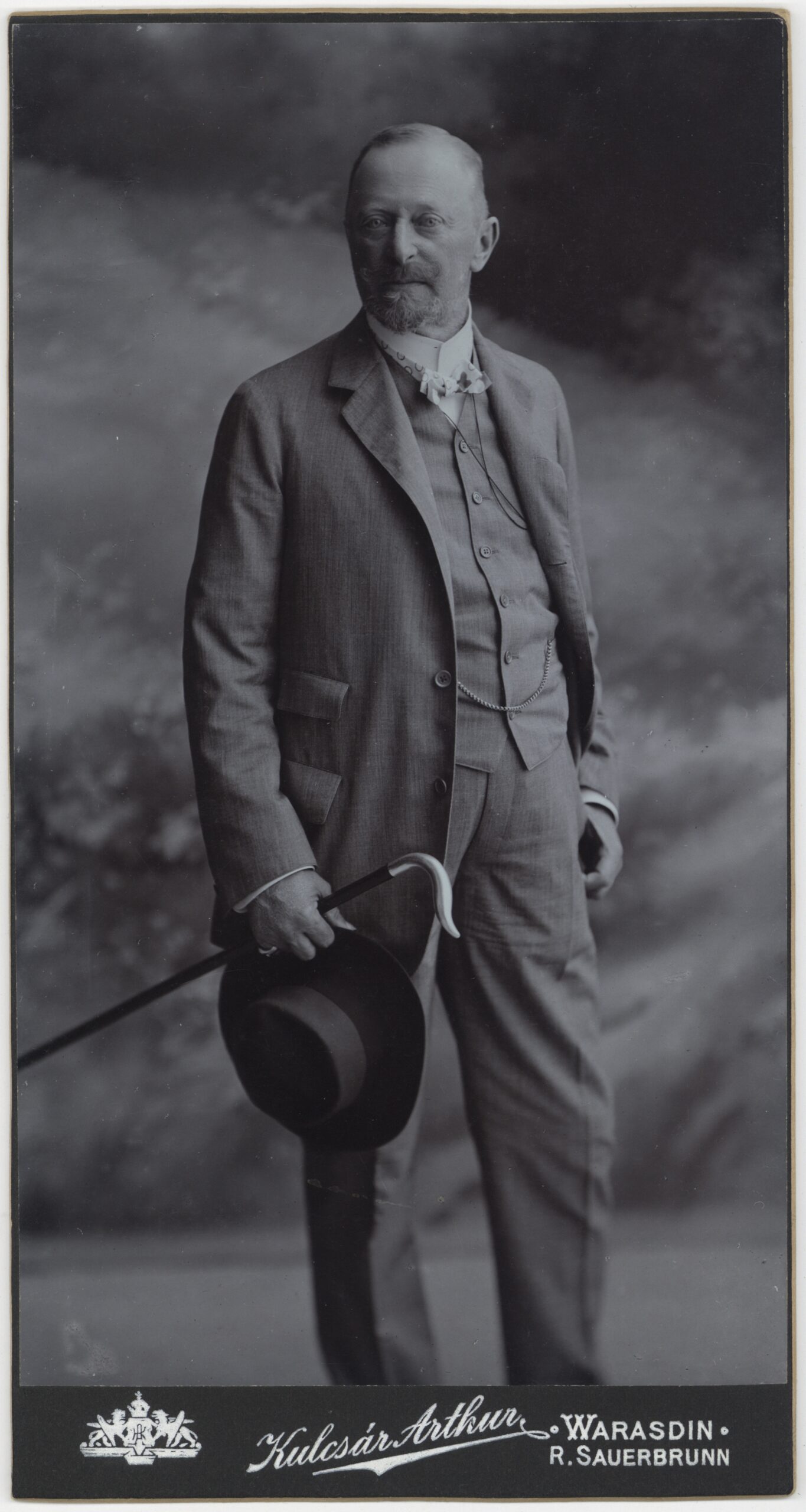
At the turn of the 20th century, the Auersperg estate at Turjak was economically and culturally revitalised by Count Leo Auersperg (1844–1915). In January 1914, on his 70th birthday, the future of Turjak still appeared promising. Yet only six months later, the First World War broke out. Count Leo died in December 1915.
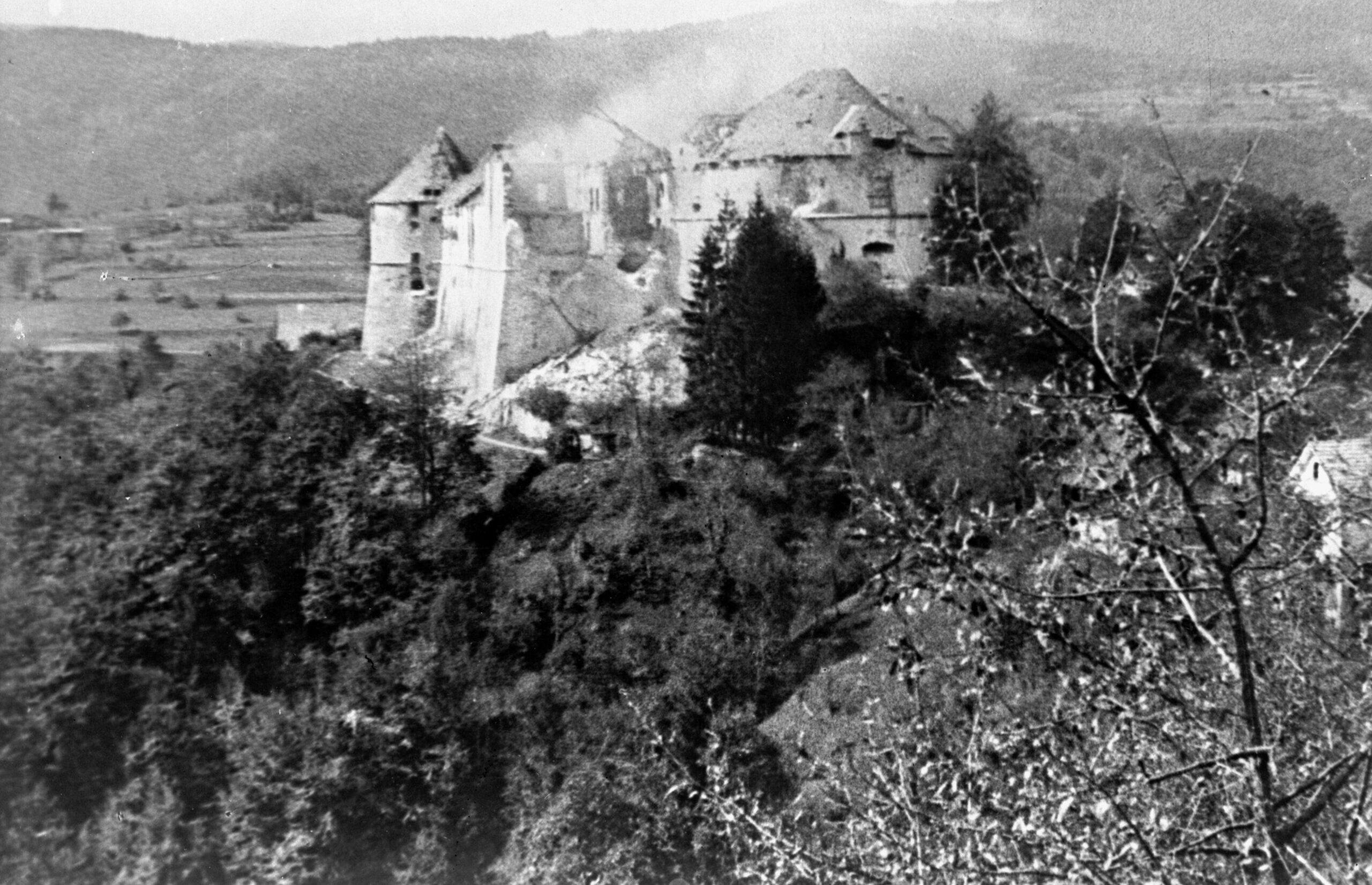
The final decline of the Auerspergs at Turjak came during the Second World War. The family remained at the castle even after the Italian occupation in 1941. Following Italy’s capitulation on 8 September 1943, the situation deteriorated dramatically. The partisan siege and the conflict with the village guards caused severe damage to the castle.
Count Herward had already withdrawn with his family to Cervignano in Italy in the summer of 1943, and during the siege the last remaining members of the family left Turjak. According to accounts, six railway wagons of property were transported to Italy. The last wagon was said to have been filled with timber, the family’s most valuable asset at the time.
With the Auerspergs’ departure to Italy, nearly 900 years of uninterrupted family ownership of the Turjak estate came to an end.
Explore the final century of the Auerspergs
The final flourishing before the fall
Wood, Sawmills, and Electricity
Count Leo Auersperg (1844–1915) took over Turjak in the mid-1870s. He based the economic revitalisation of the estate on its forests and timber production, the core of the estate’s traditional economy, and introduced modern technologies. In 1907, he established a steam-powered sawmill beneath Mokrec near Golo, connected it by telephone to the estate office at Hammerstill (Namršelj), and brought elecricity to Turjak Castle. He was also concerned with the welfare of the local market town of Turjak and its inhabitants. In 1899, he financed the construction of a public elementary school at his own expense.
Fragments of an Idyllic Family Life
Memories of Count Leo’s social concern, together with the influence of his daughter-in-law, Countess Marie, may help explain the good relations the family enjoyed with the local population. People recalled that the Auerspergs were “not harsh or arrogant, they did not exploit people but rather paid relatively fair wages for work in the forest and fields.” According to some accounts, the last generation of the Auerspergs was remembered as kind and modest.
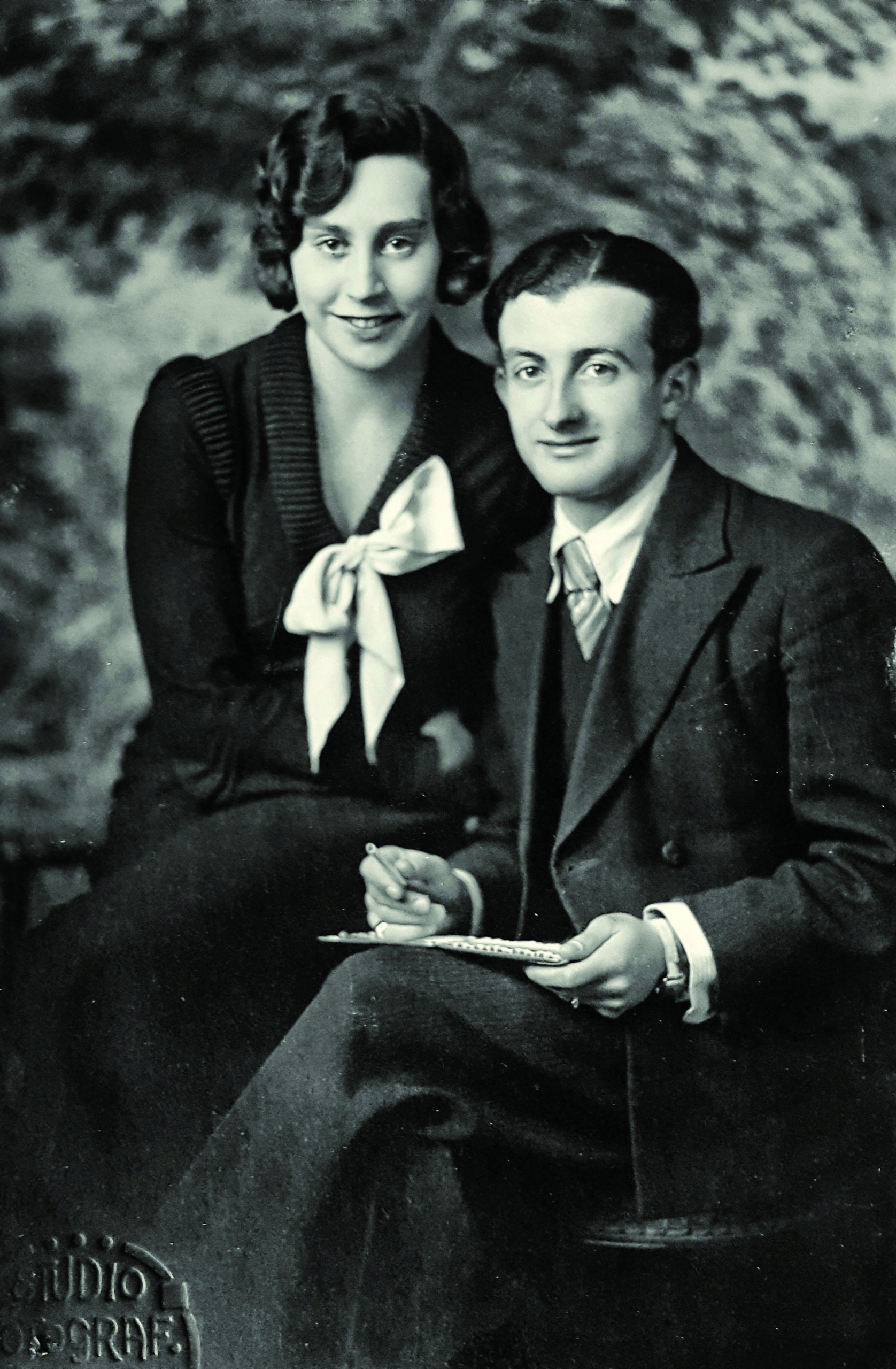
Photographs from the interwar period depict a harmonious, almost idyllic family world, an impression reinforced by contemporary accounts. In 1931, Baron Philipp Wambolt of Hopfenbach Castle (Hmeljnik) spent several days at Turjak as a 13-year-old guest. The experience left a lasting impression on him, particularly because he had been raised in a very different environment. It is likely that Countess Marie’s influence after 1925 shaped the upbringing of the children. By aristocratic standards of the time, it appears to have been less strict and less rigid than was customary.
Agrarian Reform and Debt
In the interwar period, the Auerspergs attempted to adapt to new political and economic circumstances. They were severely affected by the agrarian reform. In the Kingdom of Serbs, Croats and Slovenes, all fideicommissa (entailed estates inherited intact to the principle of primogeniture) were abolished, and large aristocratic estates were placed under state supervision. The Auersperg estates were no exception. By the end of the reform, the family had lost nearly 1,000 hectares out of a total of 2,500 hectares of forest. Nevertheless, forestry remained one of their main sources of income.
Until the onset of the economic crisis, the Auerspergs operated several sawmills. Where timber production was limited, the sawmills were leased out. To ease the estate’s growing debt burden, the family sold a number of smaller plots of land as well as the Ljubljana palace in 1927, which had long ceased to serve as a family residence.
Count Herward Jr., who married Marie-Edith, Countess Attems-Petzenstein of Cervignano, Italy, in 1935, had taken over the estate in 1931 upon reaching adulthood. As he lacked experience in estate management, the day-to-day running of the estate remained in the hands of the long-standing estate administrator, Jožef Göderer, who is said to have used his position for personal gain.
Endurance During the Second World War
The Second World War marked a turning point both for the main family line and for the Turjak estate. Following the Italian occupation in 1941, their relatives, the princely Auerspergs, sold their estates to the Italian company Emona, whereas the Auerspergs at Turjak chose to remain on their estate.
During the occupation, the family sought to persuade the authorities to reverse the Yugoslav agrarian reform, but without success. The occupying forces also burned down the sawmills at Mokrec and the Nadlišek-Pajk sawmill. Throughout the Italian occupation, Turjak Castle served as a Carabinieri post, and in the months leading up to the capitulation an Italian garrison was stationed there. After Italy surrendered on 8 September 1943, the occupied territory descended into chaos, and Turjak Castle suddenly found itself at the centre of armed conflict between the two opposing Slovenian camps.
The Devastating Consequences of the Autumn of 1943
Immediately after the withdrawal of the Italian garrison, a large number of Village Guard units gathered at Turjak Castle to reorganise their forces. Faced with this concentration of troops from the opposing camp, the Partisans promptly attempted to seize the castle. Most of the Auersperg family, including Herward and his wife Marie-Edith, had already withdrawn in the summer of 1942 to her family estate in Cervignano, Italy. The remaining members of the family – Herward’s brothers Engelbert and Karl, their mother Marie, and their aunt Elza – stayed at Turjak until the siege. According to later accounts, Engelbert paid a final tribute to the portraits of his ancestors before bidding farewell to the household staff in the kitchen.
The family first sought refuge in a house in nearby Podturjak. From there, Engelbert continued alone to Ljubljana, while the others remained behind until the fighting ended. On the morning of Monday, 20 September, they fled via Ig to Ljubljana. While waiting there to continue her journey, Countess Marie was still able to witness the surrender of Turjak. Two days later, she sent her relatives in Cervignano a letter containing in detail the events at the castle.
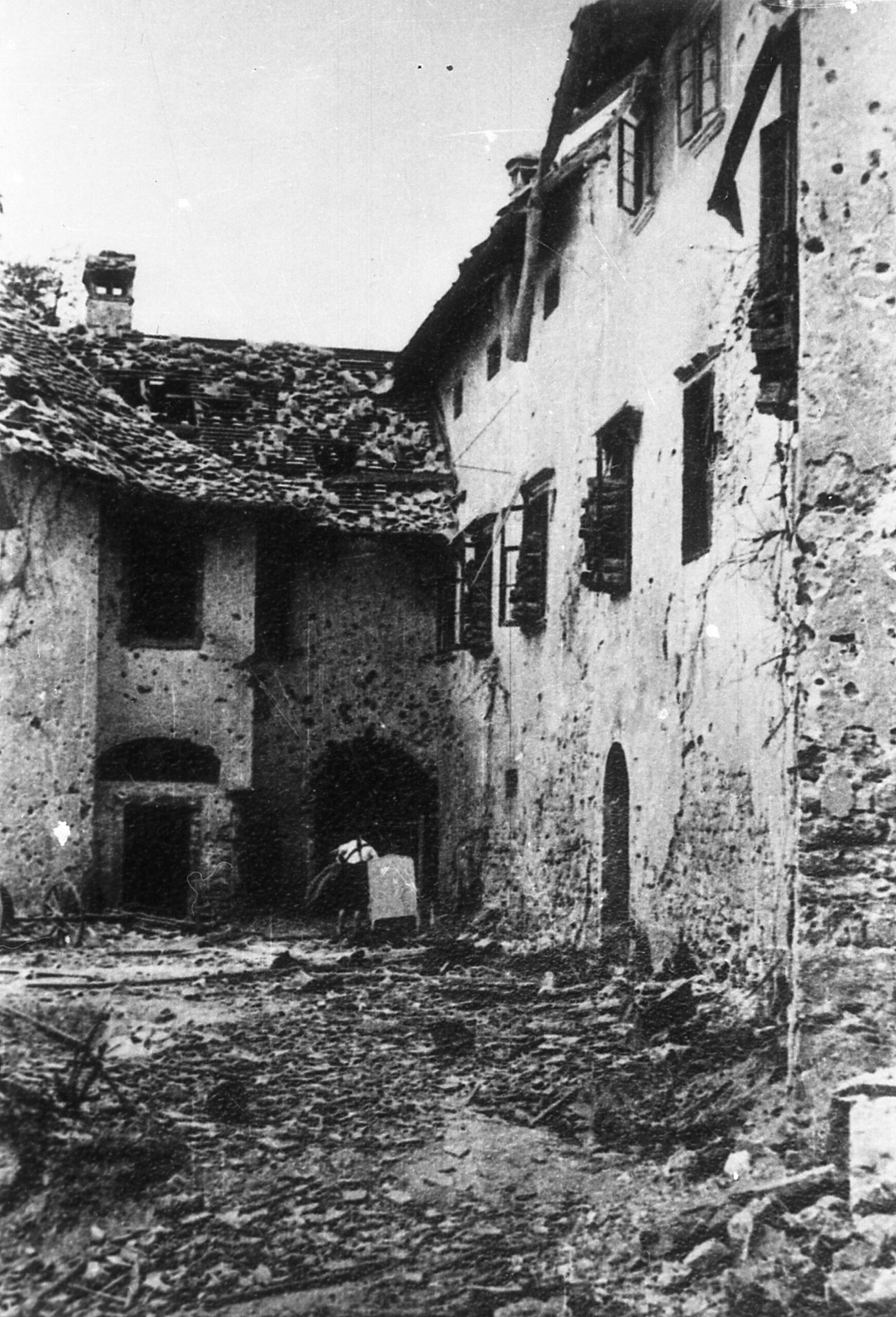
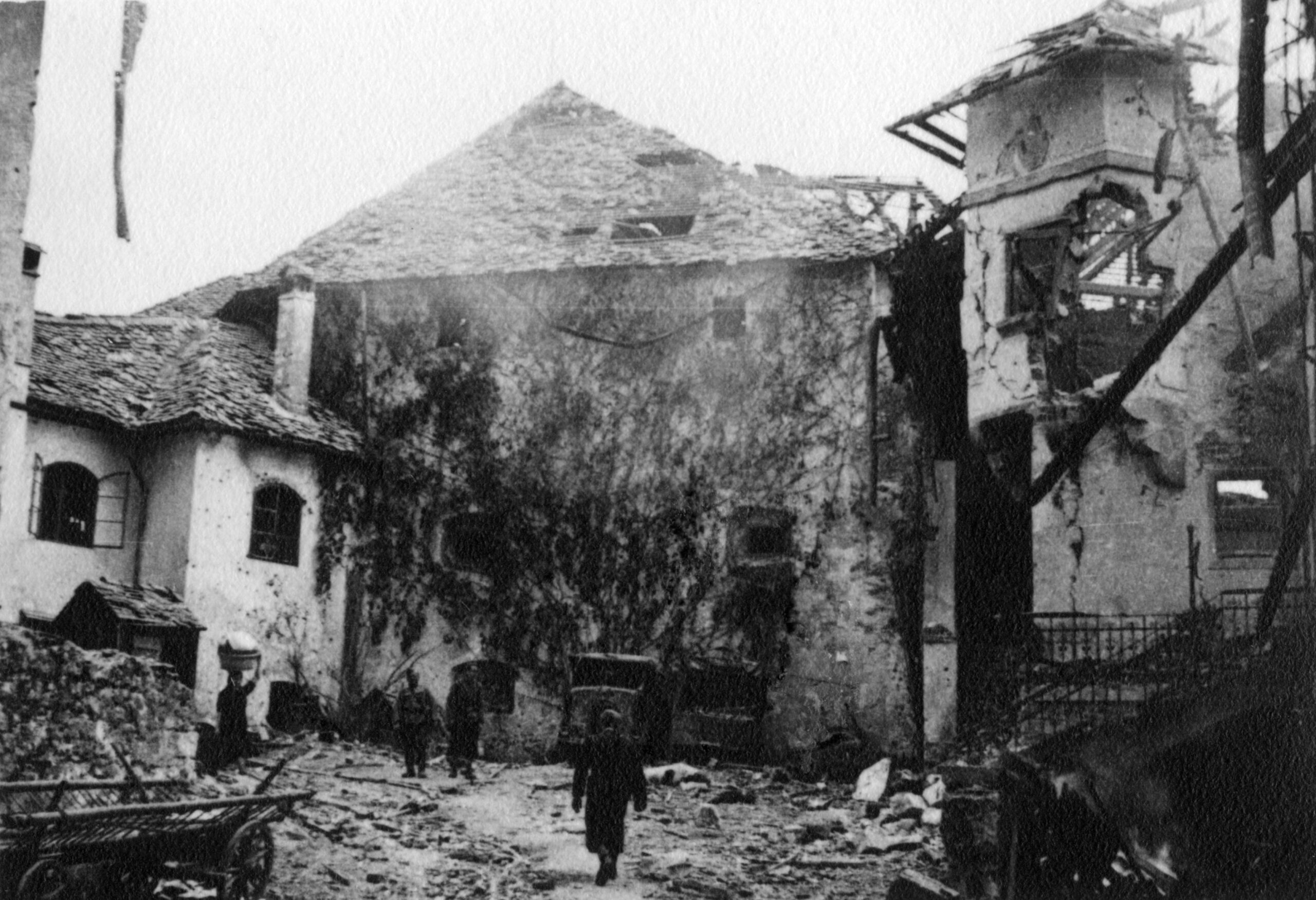
On 21 September, the writer Tone Seliškar arrived at Turjak and described the harrowing scene in a newspaper report: “Today, the castle is a ruin. It has been destroyed partly by fire, partly by explosions, and partly by the fury of both defenders and attackers. […] The courtyard is filled with craters from heavy mortar shells; hundreds of bombs lie scattered across the ground. In the middle of the courtyard lies the motionless body of a large dead dog. Everywhere there is blood, devastation, and scattered brains. The enormous portraits of the lords of Turjak from every age lie on the floor, pierced and torn apart. The exquisite marquetry of cabinets and caskets has been shattered by shells. Peasants break into the smoke-filled chambers, carrying away precious tapestries, paintings, silver-mounted weapons, tableware, furniture, and jewellery. Museums would pay millions and millions for these works of artistic and historical value. But today, time, rage, war, hatred, and revenge have the final word. They cannot be silenced.”
The Partisan siege caused extensive damage to the castle. Part of the castle chapel was destroyed, and the Renaissance entrance portal was blown up. The central residential section of the castle, the palatium, survived the siege largely intact. After the Partisans withdrew, the castle was occupied by the Slovene Home Guard and once again became a target of Partisan attacks. In December 1943, a fire was deliberately set on the first floor, destroying much of the palatium. The 45 portraits from the ancestral gallery were probably also lost in the blaze.
The members of the Auersperg family never returned to Turjak Castle. Today, descendants of the last Count of Turjak, Herward Auersperg, and his wife, Countess Marie-Edith, still live in Cervignano.