The Count’s Office and the Gallery of Ancestors
The baronial office and, after the family’s elevation in rank, the comital office was the centre of decision-making: strategies were drafted at the desk, alliances were formed, and correspondence was maintained with other noble houses across Europe. Writing was not merely a means of communication, but a tool of governance.
The castle’s portrait gallery also played an important representative role, often complemented by painted genealogical trees. Together, they emphasised the family’s status and authority. From the mid-17th century until the Second World War, the gallery formed an important part of the castle’s identity.
The office and the gallery of ancestors can be understood as a command centre of intellectual power. They were spaces of reflection and planning, as well as of oversight of the estates and the family’s social position. A writing desk, family trees, and portraits reflect a symbolic world in which history is shaped as an interconnected network of relationships between individuals and families.
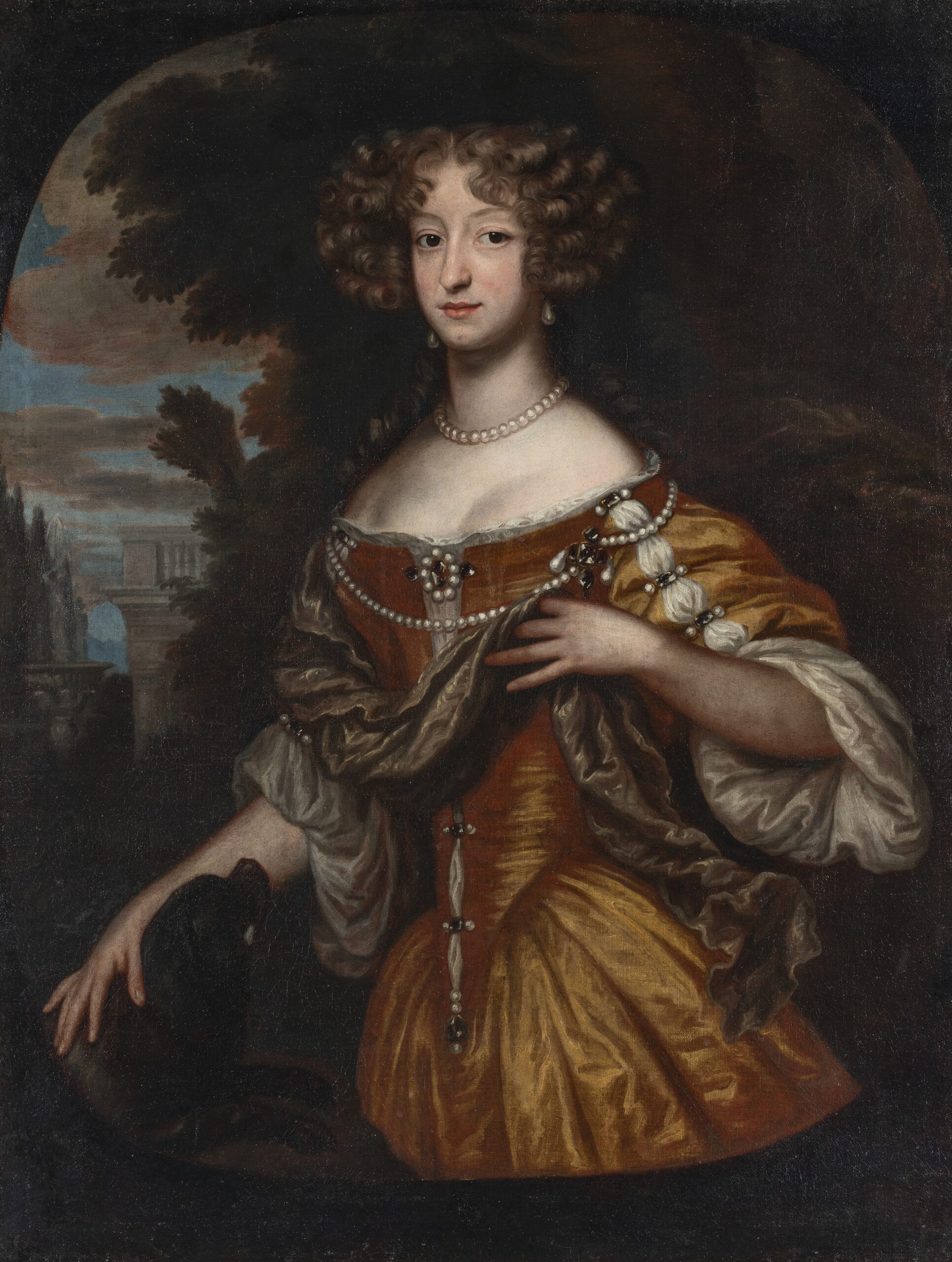
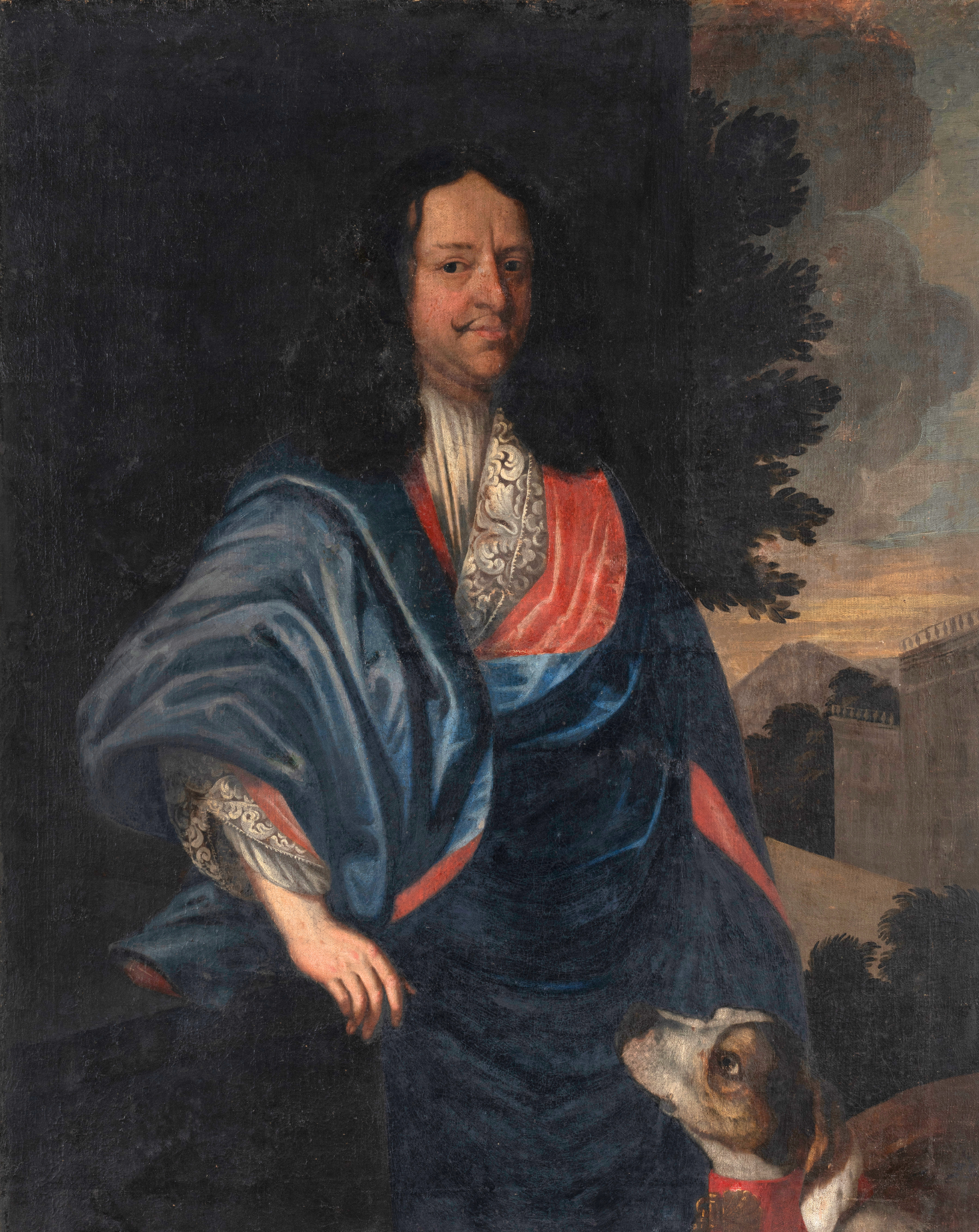
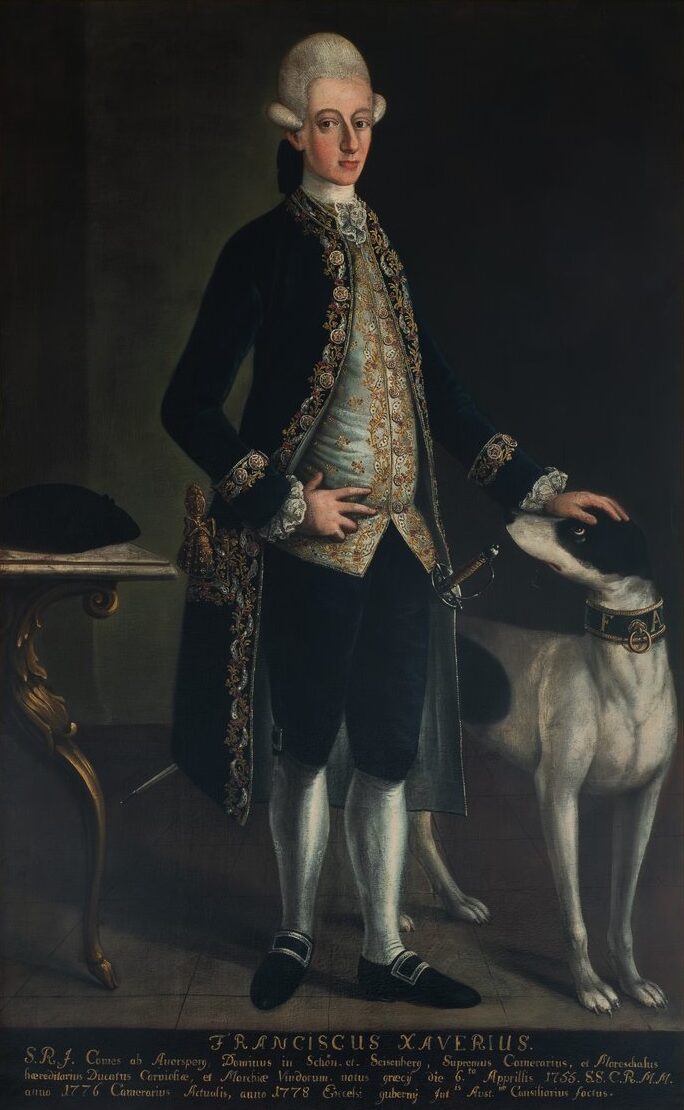
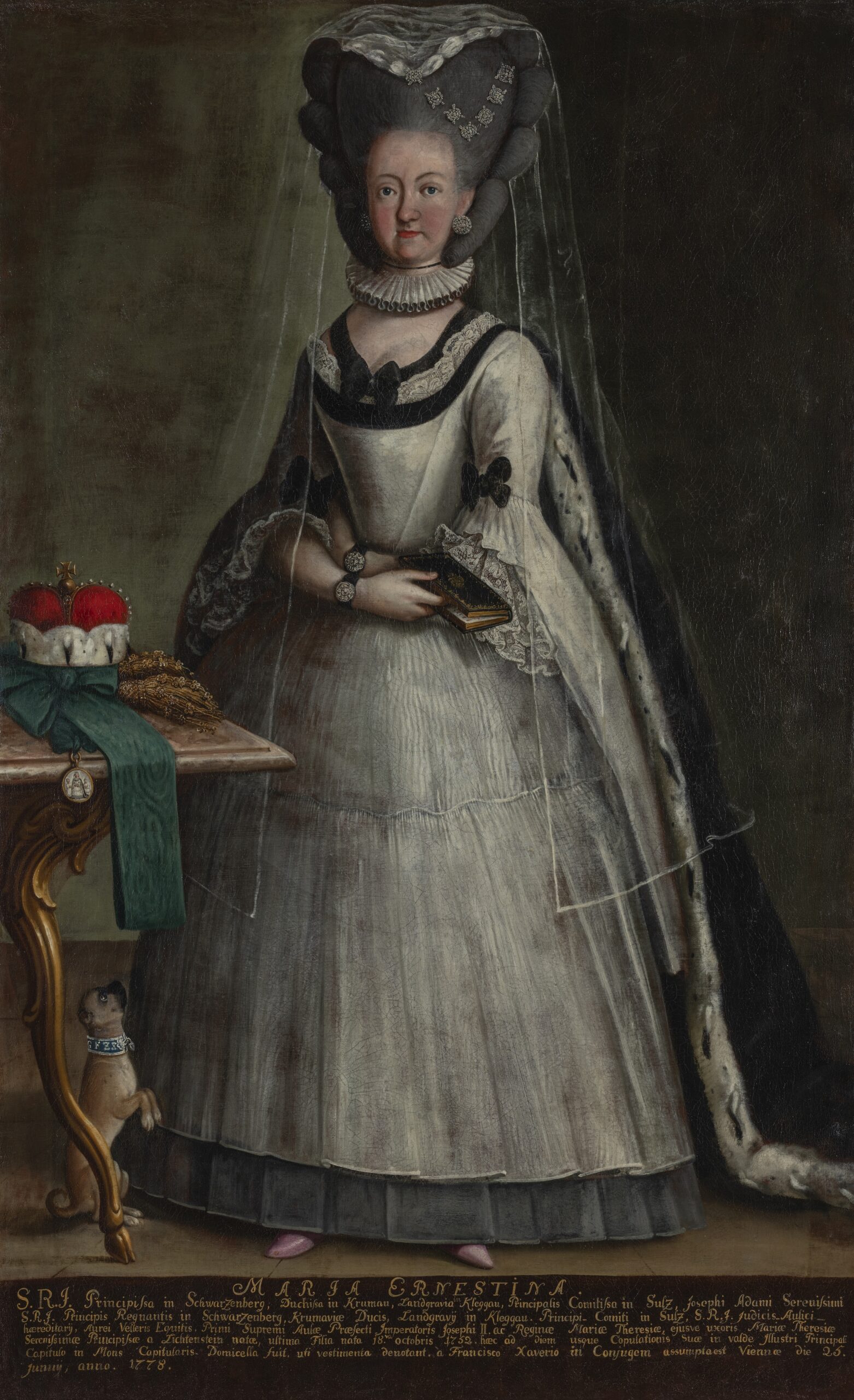
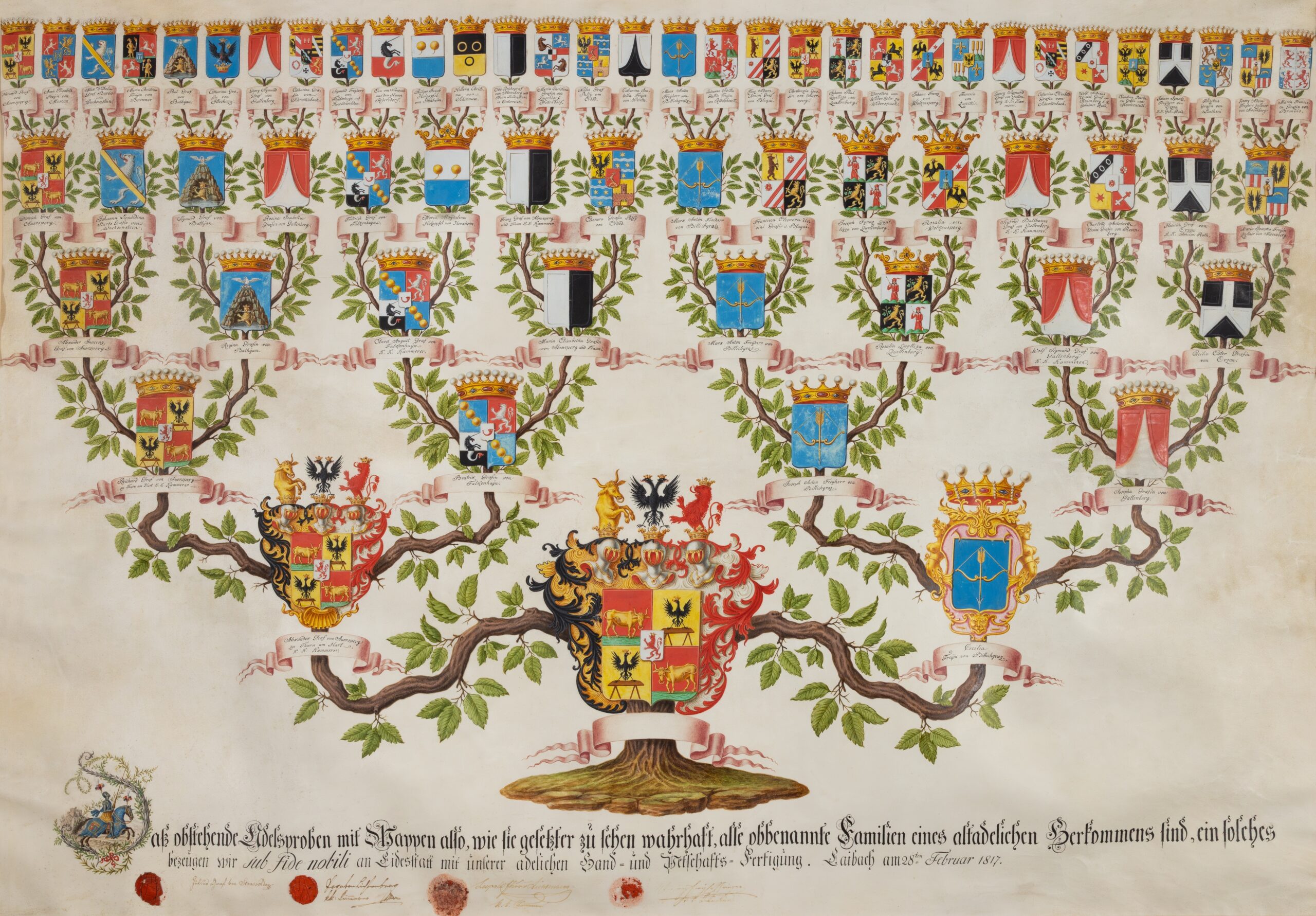
How did the Auerspergs use portraits to build power, reputation, and memory? And what became of the gallery over time? Discover the answers
Portraits from the Turjak gallery
Portraits of the Noble Family
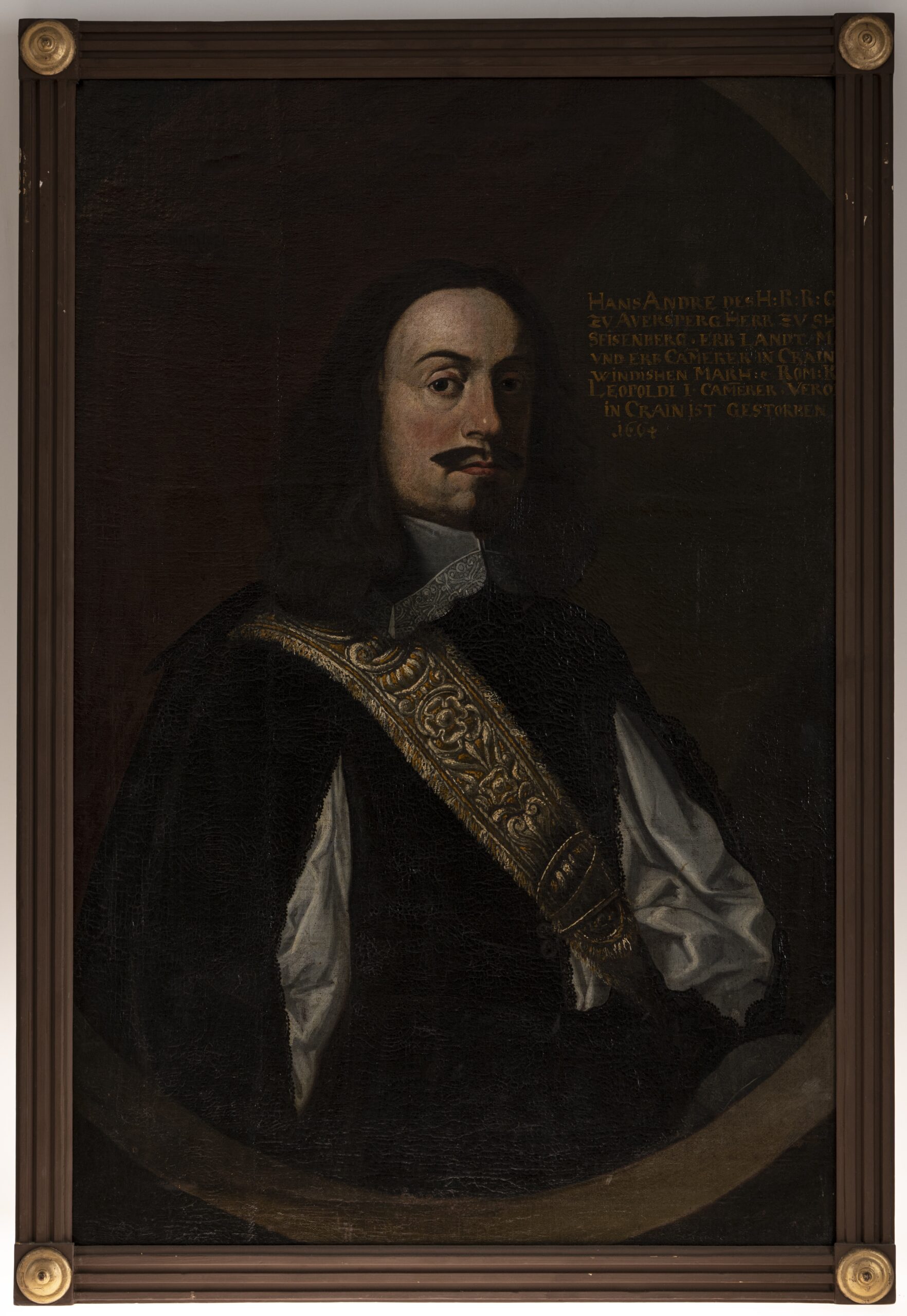
The first family portrait gallery at Turjak was established in the 17th century by Johann Andreas, Count Auersperg (1615–1664). The commissioning of at least 21 family portraits of between 1620 and 1664 can be directly linked to his elevation to the comital rank in 1630.
Across Europe, the establishment of portrait galleries from the mid-16th century onwards was closely associated with the acquisition of noble titles and high offices, as well as with the consolidation of social status. In the case of Turjak, this development also coincided with the strengthening of the family’s Catholic identity. Herbard Auersperg had converted to Catholicism shortly before his death, while his successor Johann Andreas assumed the comital title at a very young age.
45 life-size portraits
A second, more extensive ancestral gallery (Ahnengalerie) was commissioned in the 18th century by his descendant Maria Josef, Count Auersperg (1723–1805), who stands out within the Carniolan branch for his successful political and administrative career. In 1774, he was appointed provincial governor of Carniola.
According to an inventory from 1768, the earlier collection had been reduced to only eleven mostly damaged portraits, which led to the commissioning of a new series. This comprised around 45 life-size full-length portraits, partly based on earlier models and partly on imaginative reconstructions. They were integrated into richly carved oak wall panelling in the castle’s representative rooms – including the antechamber, the chamber with a fireplace, the dining room, and the audience hall – and were accompanied by inscriptions identifying the portrait subjects and highlighting their achievements.
Gallery of ancestors in pre-war photographs
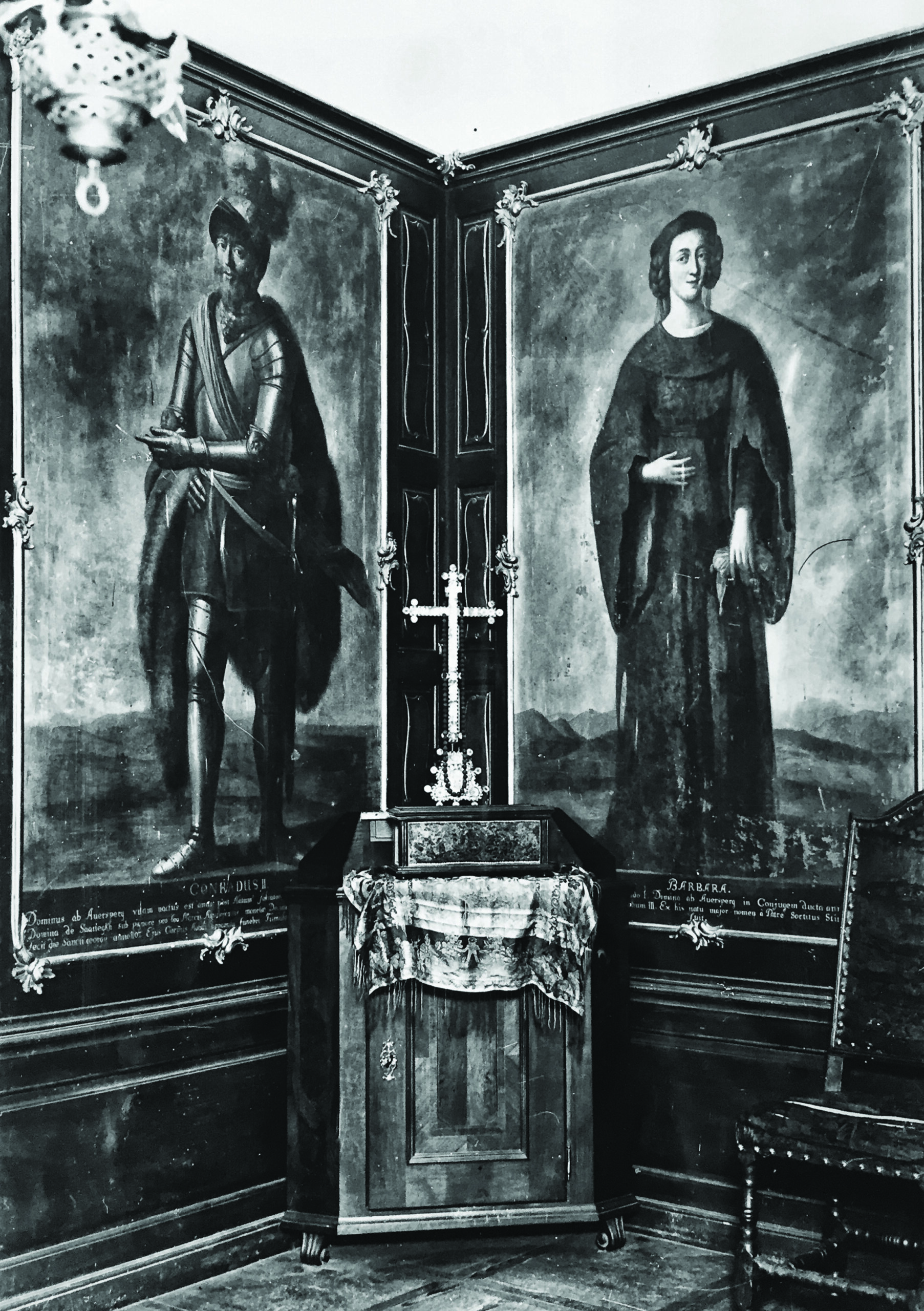
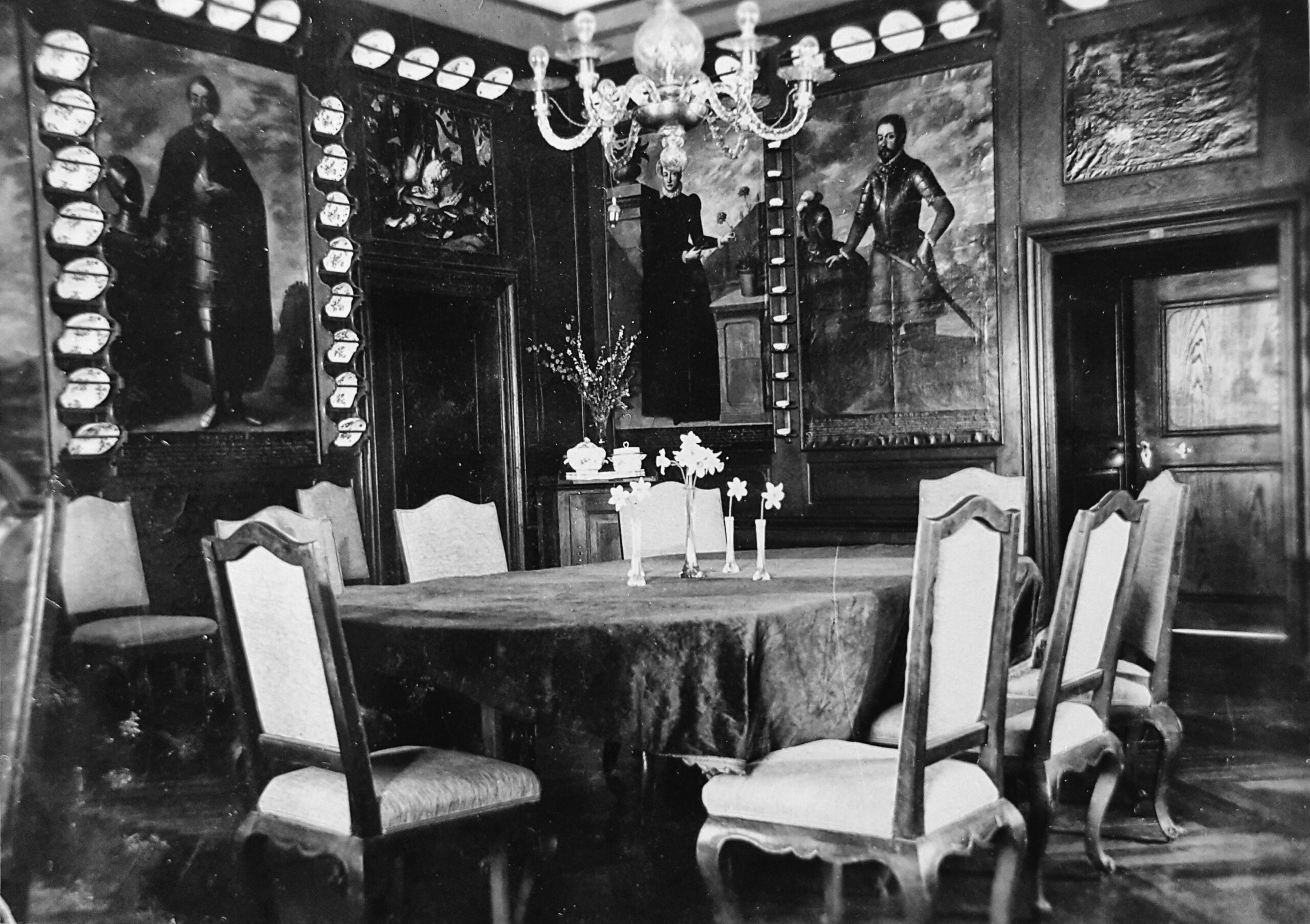
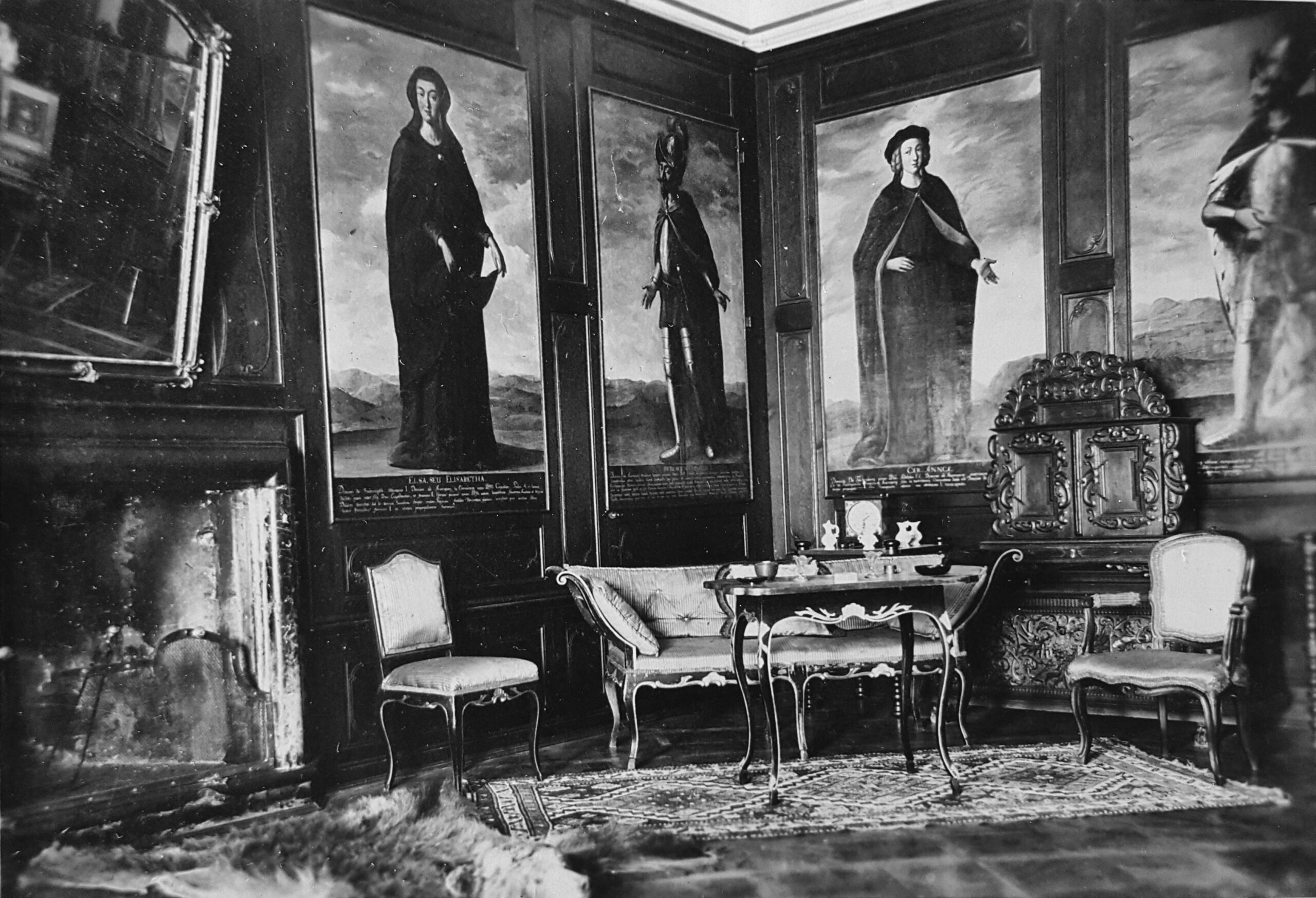
Surviving and lost portraits
Only a small portion of this heritage has survived. In 1942, five portraits were transferred to the National Museum (today held in the National Gallery of Slovenia). Among them were portraits of Wolf Engelbert and Katharina Elisabeth, as well as the young Andreas Trojan. Six 17th-century portraits entered private collections in the same year, while most of the remaining works were likely lost in the fire and destruction of the castle during the Second World War.