The Baroness’s Epitaph
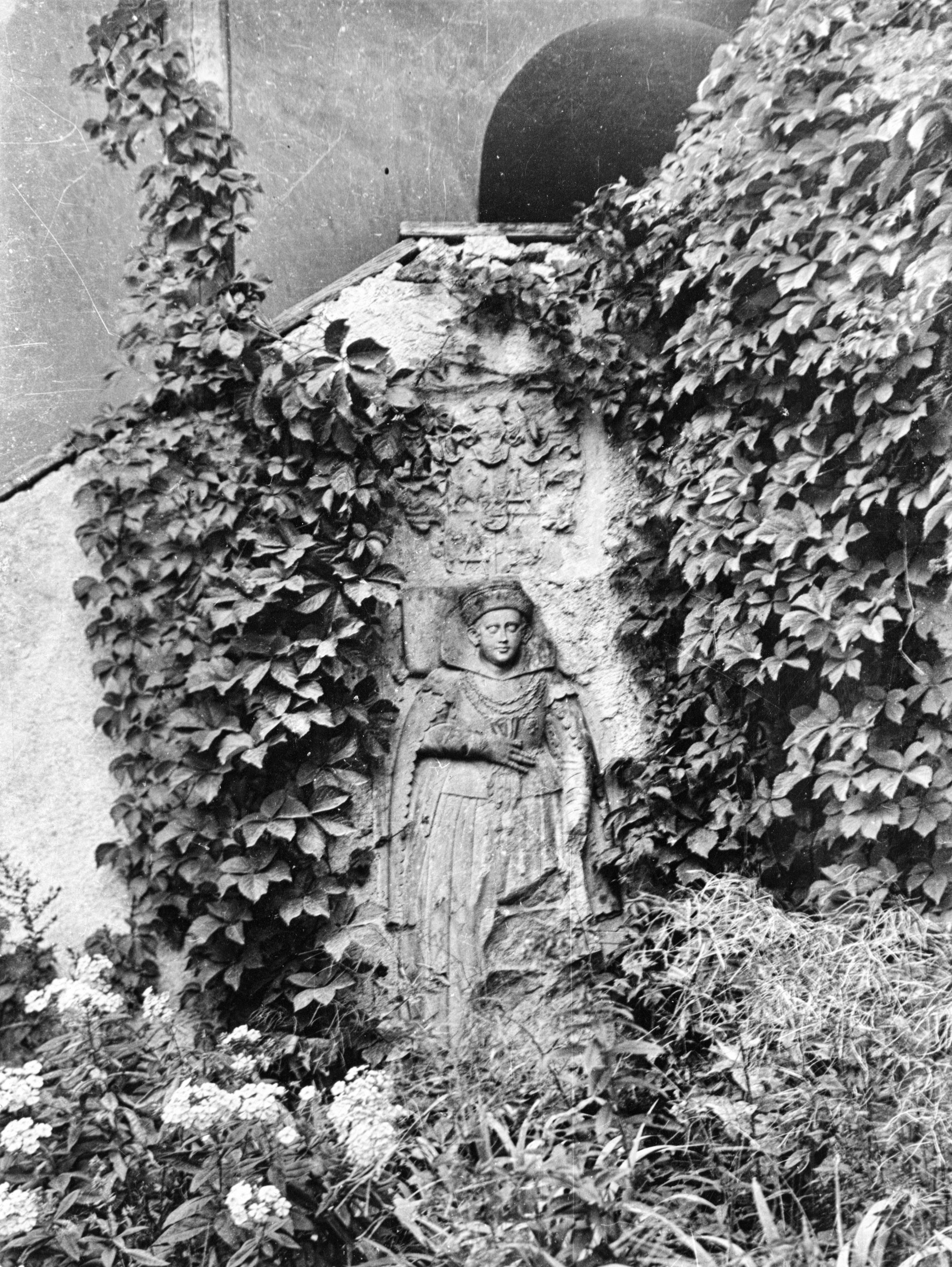
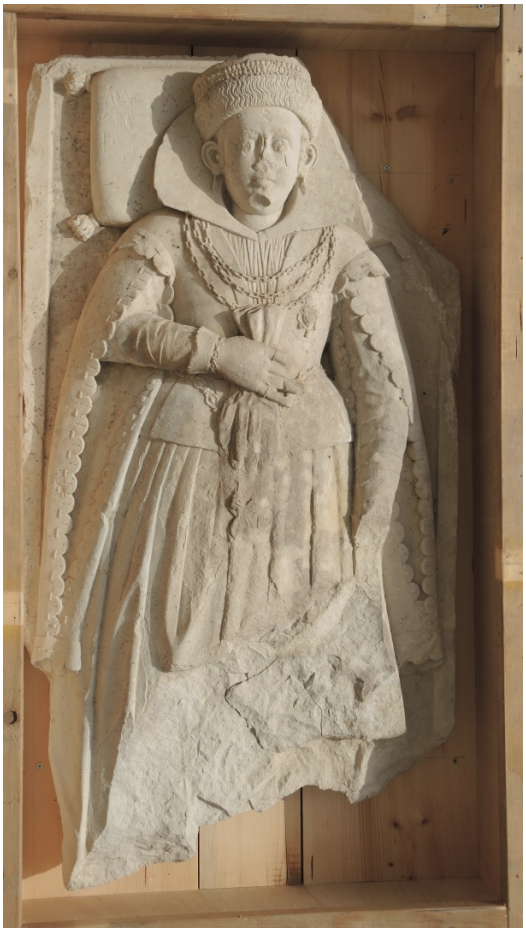
At first glance, the baroness’s tombstone appears to be nothing more than a memorial plaque.
Once built into the staircase of the castle chapel, it depicts a noblewoman dressed in the fashion of the late Spanish style period – wearing a corseted bodice, a verdugado farthingale skirt, a stiff standing collar, and necklaces.
Discover her story
But who was the woman behind the stone image?
The woman depicted on this memorial plaque is believed to be Felicitas Auersperg, née Katzianer of Katzenstein. The date of the epitaph coincides with the year of her death, 1615.
She Bore Johann Andreas
Little is known about Felicitas’s life. What we do know is that in 1609 she married Herbard Auersperg (1574–1618). With this marriage came the expectation that she would secure the continuation of the principal line of the House of Auersperg.
She gave birth to four daughters: Anna Elisabetha, Marie Dorothea, Sidonia, and Sabine. In 1615, at last, a son was born – Johann Andreas. The Carniolan polymath Janez Schönleben noted in his Genealogy of the Auersperg Family, in reference to Felizitas and the birth of her son: “She bore Johann Andreas, the continuer of the line” (Hæc illi genuit Joannem Andream stirpis propagatorem).
Felicitas did not live to see her children reach adulthood. Exhausted by successive pregnancies, she died shortly after the birth of her son. Just over two years later, in 1618, the children also lost their father. Yet, as later events would show, the succession had been secured.
Securing Succession and Expanding Influence
The image of the mother of the Auersperg heir on this epitaph is more than a portrait of rank and status. Felicitas was one link in a long chain of carefully considered decisions that enabled the House of Auersperg to maintain its presence and influence in Carniola for almost a thousand years. Her gravestone became part of the architecture of an entire dynasty.
In the 17th century, marriage was one of the most important political instruments of the European nobility. The well-known aphorism “Bella gerant alii! Tu, felix Austria, nube; nam quae Mars aliis, dat tibi regna Venus!” (Let others wage war! Thou, happy Austria, marry; for those kingdoms that Mars gives to others, Venus gives to thee!) captures the logic by which war and marriage served the same purpose: the consolidation of power.
The saying referred to the Habsburgs, but it was equally true of the noble families of Carniola, who used carefully arranged marriages to expand their influence, increase their wealth, and extend their estates.