Three Heirs to an Indivisible Estate
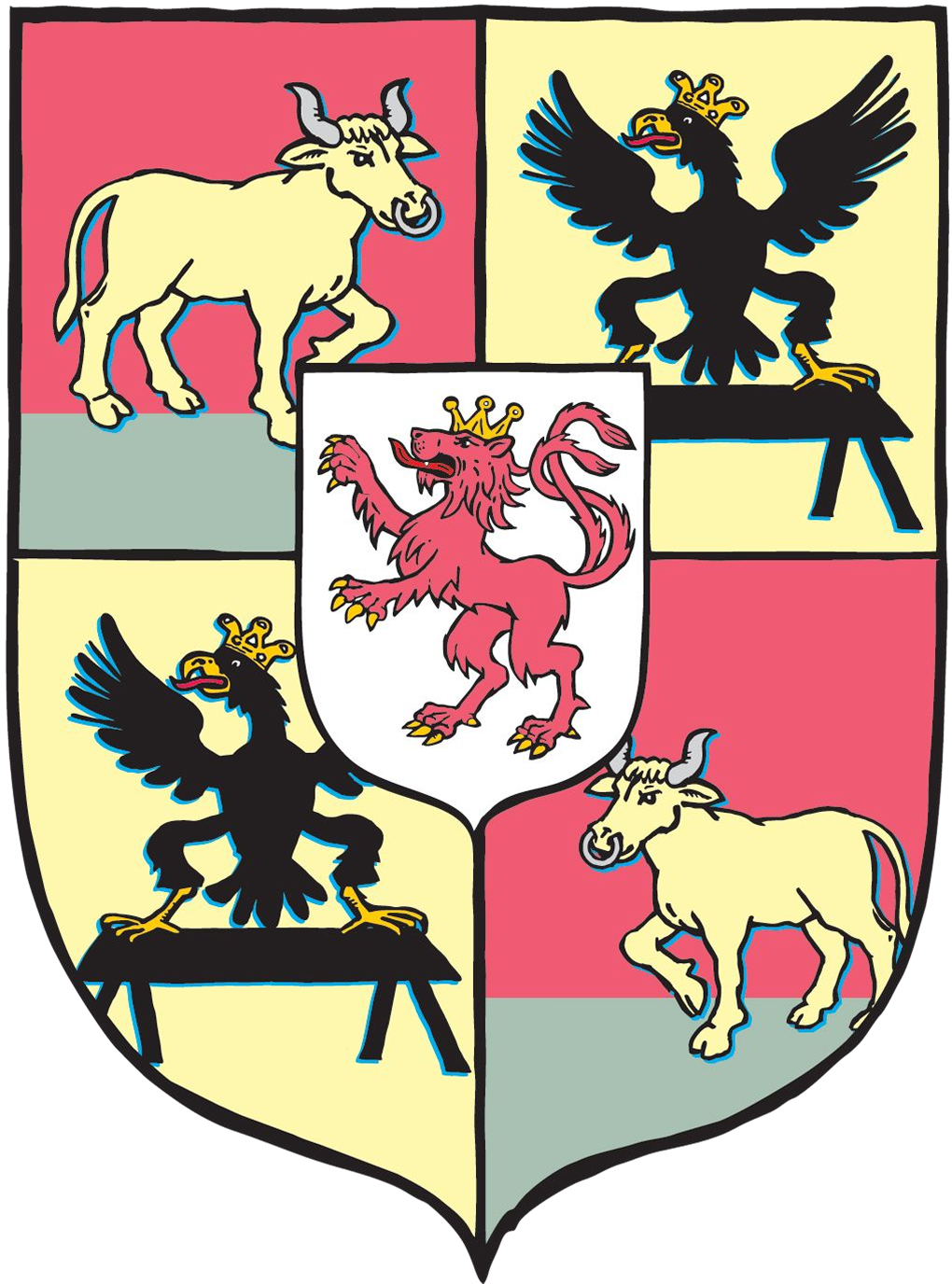
In the mid-18th century, the three sons of Count Adam Anton Siegfried (1676–1739) successively held the lordship of Turjak, while also becoming involved in disputes over its inheritance. Their conflicts grew so serious that Empress Maria Theresa intervened personally.
The first successor was Wolf Engelbert Ignatius. Although he married four times, he died without a male heir. The estates therefore passed to his brother Maria Josef, who held some of the highest offices in the Habsburg Monarchy. Among other positions, he served as provincial governor of Carniola and vice chancellor of the Bohemian-Austrian Court Chancellery. During his tenure, Turjak became an independent parish, and the castle chapel was raised to the status of a parish church.
After the death of Maria Josef, the Turjak fideicommissum passed to his younger brother Paul Alois. Due to his advanced age, however, he remained only the formal holder of the estate, while its administration was effectively managed by his son Weikhard.
Discover the Three Brothers
18th century: the ambitions and disputes of three brothers
Inheritance by Primogeniture
The establishment of the Turjak fideicommissum – an indivisible family estate – reflected the family’s growing attachment to its ancestral seat. Although his mother Katharine Elisabeth had already stipulated in her will of 1715 that the Turjak estates were to be inherited according to the principle of primogeniture, Count Adam Anton Siegfried (1676–1739) succeeded in putting her wishes into effect only through the provisions of his own testament. The fideicommissum was thus to pass undivided to the eldest son.
Under this arrangement, the first to inherit the castle and lordship was Wolf Engelbert Ignatius (1716–1768). His two younger brothers, Maria Josef (1723–1805) and Paul Alois (1729–1810), demanded compensation for their shares of the inheritance, which Wolf Engelbert Ignatius refused to pay. In 1752, the provincial court ruled in favour of the eldest brother, but the dispute eventually reached Empress Maria Theresa. She personally overturned the court’s decision and ruled in favour of the claimants.
Wolf Engelbert Ignatius ignored the empress’s ruling and never compensated his brothers. Yet, having no male heir of his own, he was succeeded in 1768 by Maria Josef.
Fate intervened once again. By the time of his death in 1805, Maria Josef had buried seven of his eight children and was left without a surviving heir. The fideicommissum thus passed to the youngest brother, who, due to his advanced age, handed over the management of the castle and lordship to his son, Weikhard.
Three Brothers, Three Careers
The eldest brother, Wolf Engelbert Ignatius, accumulated considerable wealth during his lifetime, most of it in the form of real estate. However, the estate inventories reveal him as a cultivated man with refined tastes and interests. His possessions included a telescope, opera and theatre binoculars, ivory cutlery, and several tobacco boxes, among other luxury items. Despite his wealth and four marriages, he died without a son to inherit his estate.
Maria Josef did not match his elder brother in terms of wealth, but as the only member of the Carniolan branch of the Auersperg counts, he succeeded in reaching the highest offices in the state. After holding various lower administrative posts, he became the first provincial governor of Gorizia and Gradisca at the end of 1763. Following his brother’s death in 1768, he served as an assessor at the Supreme Court in Vienna. In 1771 he was appointed governor of Transylvania but resigned in 1774 following a dispute. He was then appointed provincial governor of Carniola, and six years later (1780) became Vice-Chancellor of the Bohemian-Austrian Court Chancellery. Under his governance, Turjak was elevated to an independent parish, with the castle chapel becoming the parish church. He also had a new family crypt built in the Turjak cemetery, as the old burial place in the Franciscan monastery in Ljubljana was no longer in use. He himself became the first member of the family to be buried in the new crypt in early 1806.
After Maria Josef’s death, the Turjak fideicommissum passed to his younger brother, Paul Alois, whose career appears to have been the least eventful. Yet even his character is reflected in his motto, “Fearlessly steadfast,” which he adopted upon joining the Dismas Society. Given his advanced age, he held the fideicommissum only in name, while its day-to-day management was carried out by his son Weikhard. Paul Alois appears to have spent most of his life in Carniola, either at Turjak Castle or in the family palace in Ljubljana, which at the time was a richly appointed and representative residence. In 1784, it was there that he also hosted Emperor Joseph II.